Why fabric is the first decision, not the last
When buyers compare backpack quotes, the numbers that differ most are rarely labor or packaging - they are fabric costs. The main body fabric typically accounts for the largest share of a backpack's bill of materials, so choosing it early locks in your price band, your durability level and even which compliance tests you can pass.
Yet fabric is often specified last, copied from a competitor's listing or left as 'standard material' in the tech pack. That is how projects end up over budget or with a bag that fails in the field. This guide walks through the decisions in the order our production team actually makes them.
Denier explained: what 300D, 600D and 1680D really mean
Denier (the 'D' in 600D) measures the thickness of the individual yarns woven into the fabric - technically, the weight in grams of 9,000 meters of yarn. Higher denier means thicker yarn, which generally translates to a heavier, more abrasion-resistant and stiffer fabric.
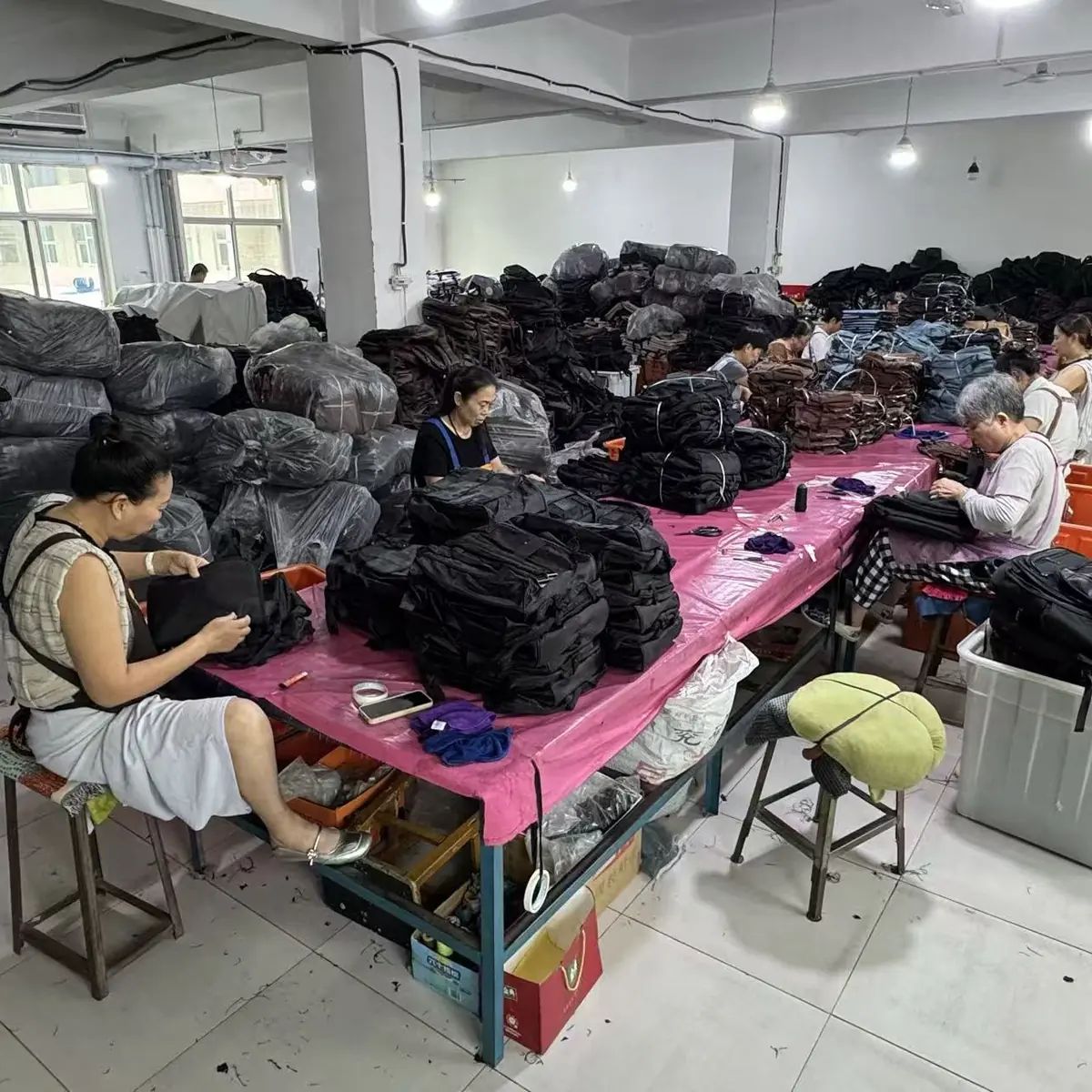
As a practical rule of thumb from our cutting tables:
- 210D-300D - lightweight linings, foldable daypacks and inner pockets where weight matters more than abrasion.
- 420D-600D - the workhorse range for school backpacks and everyday commuter bags; a good balance of weight, cost and durability.
- 900D-1200D - heavy-duty outdoor and travel packs that face rough handling, straps and high-stress panels.
- 1680D ballistic - premium business and tactical bags; extremely abrasion-resistant, with a firmer hand feel and higher cost.
Denier is not a quality score
A common sourcing mistake is treating denier as a quality ranking - assuming 1680D is always 'better' than 600D. Denier only describes yarn thickness. Weave density (threads per inch), yarn quality and the coating system often matter more for real-world performance.
A tightly woven 600D with a solid PU coating can outlast a loosely woven 1200D with a thin coating. This is also where low-cost quotes hide their savings: the listing says 600D, but the weave is sparse and the coating is one light pass. If two quotes for the 'same' fabric differ sharply, ask for the fabric weight in grams per square meter (GSM) - it is much harder to fake than a denier number.
Polyester vs nylon vs rPET: choosing the fiber
The three fibers we run most often each have a clear role:
- Polyester - the default for school, promotional and mid-market bags. Excellent UV and color stability, low moisture absorption, and the best cost-to-performance ratio.
- Nylon - stronger and more abrasion-resistant than polyester at the same weight, with a softer hand feel. Costs more and can fade faster under UV, so it suits premium urban and outdoor lines.
- rPET (recycled polyester) - made from post-consumer bottles, performs close to virgin polyester. Increasingly requested by European and North American brands; pair it with a GRS (Global Recycled Standard) certificate so the recycled claim is auditable.
Coatings and water resistance: PU, PVC, TPU and DWR
Uncoated woven fabric is not water-resistant - the coating does that work. Most backpack fabrics get a polyurethane (PU) coating on the back side, measured in passes; more passes mean higher water resistance and a slightly stiffer fabric.
PVC backing is the budget option for high waterproofness, but it is heavier and restricted by some brands for environmental reasons. TPU films cost more and stay flexible in cold weather, which is why they appear on premium outdoor gear. A DWR (durable water repellent) finish on the face fabric makes water bead off but wears away with use - treat it as a supplement, not a substitute for the coating.
Be precise in your tech pack: 'waterproof' and 'water-resistant' are different promises. A water-resistant school bag survives rain on the walk home; a waterproof roll-top needs welded seams and a completely different construction. Specifying the wrong word can add cost you do not need - or complaints you do not want.
Matching fabric to the bag you are actually making
There is no single best fabric - only the right fabric for the use case and price point. The combinations we recommend most often:
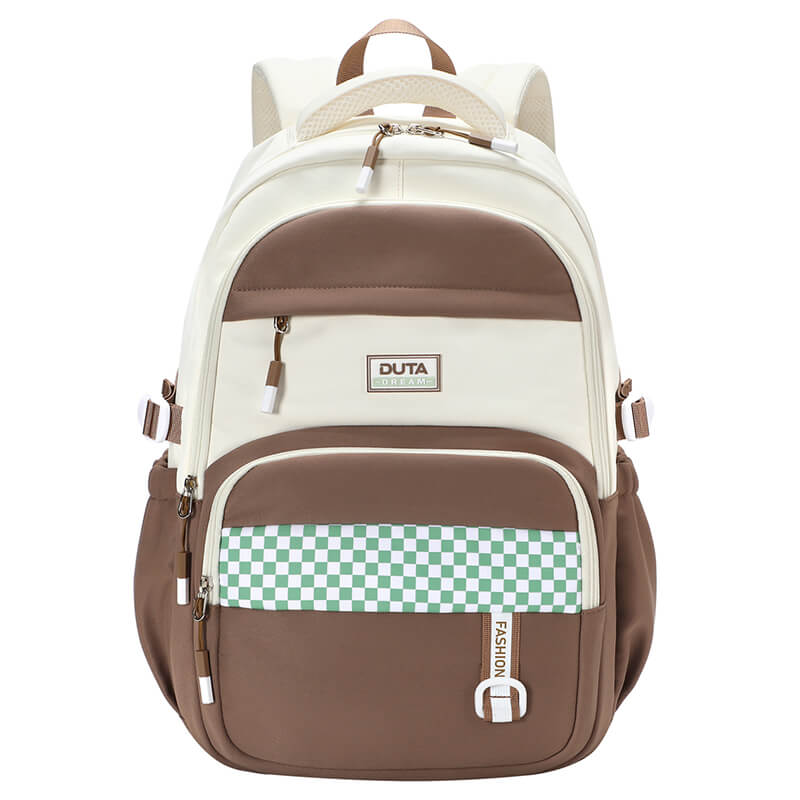
- School backpacks - 600D polyester body with 300D lining; add reinforcement patches at the base. Kid-safe finishes and lead/phthalate-compliant trims are non-negotiable.
- Laptop and business backpacks - 900D polyester or 1680D ballistic body, high-density foam padding, and a soft brushed lining for the laptop sleeve.
- Travel and duffel bags - 900D-1200D polyester with a heavier PU coating, bar-tacked handles and #10 zippers on main openings.
- Sports and gym bags - 420D-600D with ventilated mesh zones and a TPU or PVC-backed wet compartment for shoes.
How fabric choices show up in testing
Whatever fabric you choose, it should be verified, not assumed. In our QC lab the fabric-related checks that catch the most problems are abrasion resistance (Martindale or Taber), color fastness to rubbing and light, tensile and tear strength, and coating adhesion after wash cycles.
For export orders, fabric also drives chemical compliance: REACH in the EU and CPSIA for US children's products both regulate substances that can appear in dyes, coatings and trims. Confirm which market you are shipping to before bulk fabric is dyed - retrofitting compliance after production is expensive and slow.
Specifying fabric in your tech pack: a checklist
You do not need to be a textile engineer to get an accurate quote. Including these six lines in your tech pack or RFQ removes most of the guesswork and makes quotes truly comparable:
- Fiber and denier - e.g. '600D polyester' or '1680D nylon'.
- Weight - target GSM, or ask the factory to state it in the quote.
- Coating - type and passes, e.g. 'PU 2 passes' or 'TPU film'.
- Water resistance level - water-resistant or waterproof, and where.
- Compliance - target market and required tests (REACH, CPSIA, GRS).
- Reference - a physical swatch or an existing product you want to match.
Get a fabric recommendation for your project
If you are unsure where to start, send us your use case, target retail price and destination market. Our team will suggest two or three fabric options with sample swatches, so you can feel the difference before committing to a 5-7 day sample or bulk order. A ten-minute conversation about fabric at the start of a project routinely saves weeks of revision later.
Ready to start your backpack project?
Tell us your idea and get a quote plus a 5-7 day sample plan from the factory.